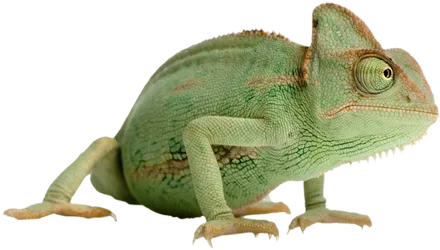
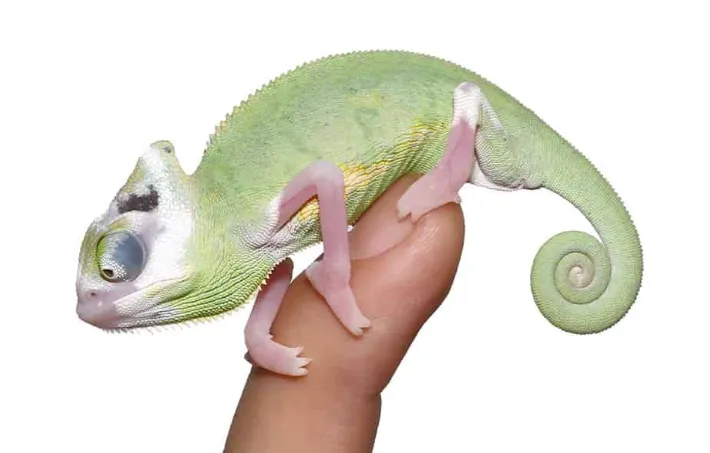
Veiled chameleon
Chamaeleo calyptratus
The veiled chameleon is solitary, territorial, and highly sensitive to stress and dehydration. It needs a well‑ventilated enclosure (screen type), a strong thermal and UVB gradient, high ambient humidity with drying phases, and access to water via dripping/misting rather than a bowl. Minimize handling.
Overview & key figures
Regulations
CITES Appendix II
ℹ️Import/keeping under CITES Appendix II: require proof of legal origin (CITES certificate). Subject to Swiss OPAn/TSchV: minimum husbandry standards for lizards (Annex 2, reptiles: minimum enclosure sizes, UVB, temperature and humidity gradients). A reptile keeper competence certificate is recommended; some cantons may require it. Release is prohibited; check additional cantonal rules.
Lifespan
from 5 to 8years
ℹ️Males often 6-8 years; females 4-6 years (egg-laying is taxing)
Adult weight
from 90 to 180g
ℹ️Males 120-180 g; females 90-140 g (outside gestation)
Adult size
from 35 to 60cm
ℹ️Total length; males larger with more developed casque
Lifestyle
Diurnal
Body temperature
Ectothermic
Sexual maturity
from 5 to 8months
ℹ️Females become fertile early; avoid breeding before 12 months to limit dystocia
Incubation
from 160 to 220days
ℹ️Incubation 26-28 °C; typically 6-7 months
Litter / clutch size
from 20 to 60eggs
ℹ️Clutches of 20-50+; depends on BCS and age
Habitat & environment
Type of housing
Vertical mesh/screen enclosure, strongly ventilated, rich in branches and foliage
Substrate & bedding
Bare floor, absorbent pad or properly drained bioactive substrate (avoid ingestion). No loose particles on the floor for females without a nest box.
Lighting
Photoperiod : 11–12 h/day
UVB
- UVB need : Essential
- Recommended brands : X-ReptileReptile ExpertSolar RaptorArcadia
- Replacement : Every 6–12 months per manufacturer
- UVB does not pass through glass or plexiglass. Place the lamp inside the terrarium, under a protective grille. Direct sun behind a window pane is ineffective and may cause dangerous overheating.
- For the health of these reptiles, metal halide lamps are the gold standard for UV: they deliver a powerful UVB spectrum, far stronger than fluorescent tubes or compact bulbs, optimising vitamin D synthesis and therefore calcium absorption. They reduce the risk of metabolic bone disease, and also provide intense visible light and an even heat output that drive activity.
Exercise & outings
Rich vertical structure; renew branches/foliage to encourage exploration; avoid unnecessary handling (stress).
Required equipment
- ✓ Many horizontal/oblique branches (diameter 1-2× the hand's width)
- ✓ Non-toxic live plants (Ficus, Schefflera, Pothos) for cover and drinking
- ✓ Hydration system: automatic misting + drip system
- ✓ Quality UVB lamp (T5 HO) + halogen basking lamp
- ✓ Thermostats/dimmers, elevated probe thermometers, hygrometer
- ✓ Nest box for females (bucket 25-30 cm deep, moist sand/soil)
Technical parameters
| Hot spot | 31–33 °C Temperature on the basking perch under the lamp |
| Cool spot | 22–25 °C Low/shaded area |
| Ambient temperature | 24–28 °C Vertical gradient; avoid ambient temperatures >30 °C |
| Humidity | 50–70 % Humidity cycles: peaks 80-100% during/just after misting, returning to 50-60% during the day |
Nutrition
Daily base
Opportunistic insectivore. Gut-load prey for 24-48 hrs + dust with Ca/vitamins per protocol. Hydration mainly via droplets on foliage.
🦗 Insects
🥕 Vegetables & greens
Species known to occasionally consume plants (tender leaves). Offer sparingly.
⏰ Feeding frequency
- • Juveniles (0-6 months): small prey daily (10-15/day in portions)
- • Subadults (6-12 months): every other day
- • Adults: 3-4 days/week; non-gravid females on moderate rations to prevent obesity and excess egg production
Treats
Mealworms/superworms as treats only (high fat content, unfavourable Ca/P ratio).
To avoid
- 🐾 Wild-caught prey — Pesticide/parasite risk
- 📦 Processed food — Processed human foods: unsuitable
Behaviour & socialisation
Social life
Solitary and territorial. Co‑housing outside breeding is not recommended due to stress, anorexia, and injury risks. It needs dense foliage/branches for visual cover and retreats.
Activity cycle: Diurnal. It needs a basking spot around 32–35 °C, a cool zone around 22–26 °C, nighttime 18–22 °C; high‑quality UVB with target UVI ~2–3 at the basking area. Humidity 50–70% with misting morning/evening and drying between sessions. Provide daily hydration via dripper/misting and a varied insect diet with calcium and vitamin supplements (D3/UVB appropriate).
Enrichment
- Live plants, branch network of varied diameters
- Misting simulating dew/showers
- Controlled seasonal photoperiod variation
- Active prey (live insects) in secured feeding containers
Health & prevention
Preventive medicine
Quarantine ≥60-90 days, serial faecal exams, strict UVB and gradient control, lamp replacement schedule, weight/BCS tracking, parasite screening before introduction.
Vaccination
No routine vaccinations
Surgery & sterilisation
Ovariosalpingectomy (dystocia, follicular stasis), foreign-body removal, dental/gingival care (stomatitis), removal of skin abscesses.
Clinical warning signs
If any of these symptoms appear, prompt veterinary care is essential. Contact an exotic-pet vet as soon as possible — they can assess your animal's condition and make the appropriate diagnosis.
Common conditions
MBD - metabolic bone disease (secondary hypocalcaemia)
Cause: UVB/D3 deficiency, insufficient dietary Ca, unfavourable Ca/P ratios
Symptoms: Weakness, tremors, bowed limbs, rubber jaw, pathological fractures
Prevention: Stable UVI 2-3 at the perch, appropriate Ca supplements, gut-loading
Stomatitis / oral infections
Cause: Microtrauma, immunosuppression, deficiencies, chronic humidity
Symptoms: Hypersalivation, caseous debris, halitosis, pain
Prevention: Hygiene, varied insects, adequate UVB/thermoregulation
Respiratory infections
Cause: Insufficient ventilation, over-humidification without daytime drying, unsuitable temperatures
Symptoms: Nasal discharge, wheezing, open-mouth breathing, anorexia
Prevention: Mesh enclosure, humidity cycles with dry periods, temperature control
Parasitoses (pinworms, coccidia, Strongyloides, Cryptosporidium)
Cause: New arrivals, contaminated prey, poor hygiene
Symptoms: Weight loss, diarrhoea, intermittent appetite
Prevention: Quarantine, faecal/flotation exams, targeted treatments
Dystocia/follicular stasis in females
Cause: No nest box, hypocalcaemia, dehydration, stress
Symptoms: Lethargy, anorexia, distension, absence of laying
Prevention: Permanent nest box for sexually mature females, optimised Ca/UVB status, hydration
Thermal burns
Cause: Direct contact with unprotected bulbs/emitters
Symptoms: Erythematous/blackened patches, blisters
Prevention: Protective guards, correct distances, perch-level temperature control
Gout (hyperuricaemia/renal insufficiency)
Cause: Chronic dehydration, protein excess, nephrotoxicity
Symptoms: Lethargy, joint swellings, whitish deposits
Prevention: Hydration via misting/drippers, humidity cycles, clean water
Key indicator of a food's mineral balance, especially in reptiles (tortoises, lizards): a calcium-favoured ratio supports bone and shell strength and helps prevent metabolic bone disease. In herbivorous mammals, mineral balance is managed differently (hay, supplementation, UV light) — these targets don't translate directly.
For insects (crickets, roaches…), a calcium powder at feeding time can offset an unfavourable ratio.
- ≥ 2 — Adequate balance
- 1–2 — In moderation
- < 1 — Avoid / occasional only
This food is above the 50,000 IU/kg dry matter threshold, making it a good vitamin A source.
Content : — IU/kg DM
Essential for mucous membranes, skin, feathers and vision. Deficiency: respiratory infections, dysecdysis, eye problems, drop in laying.