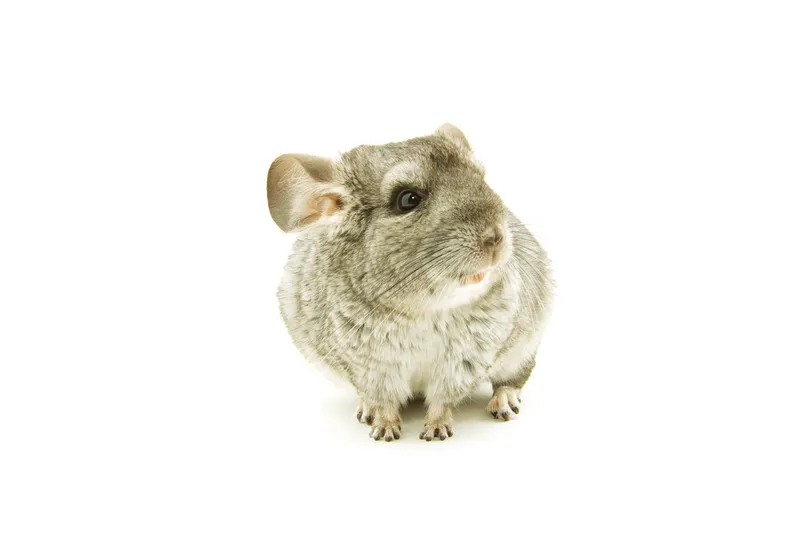
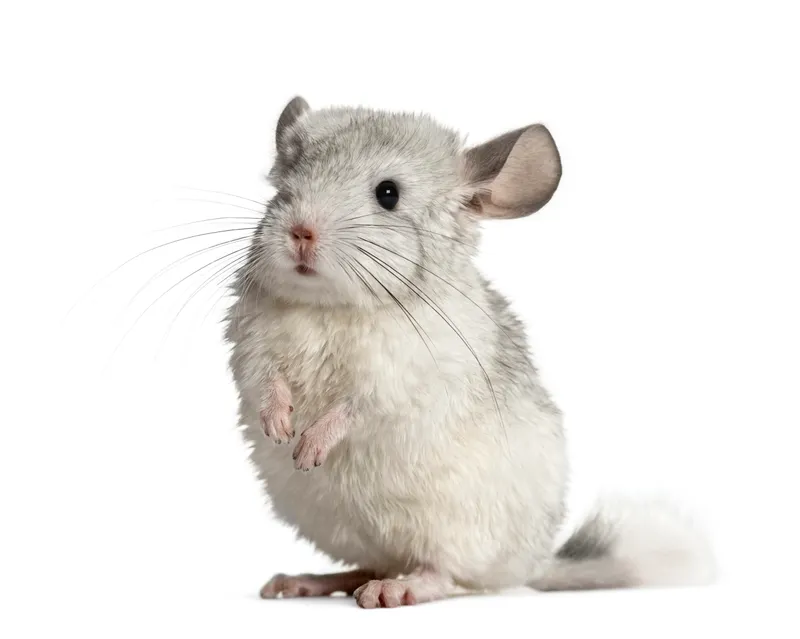
Long-tailed chinchilla
Chinchilla lanigera
The chinchilla is a gregarious, quiet, and stress‑sensitive animal. It needs a calm routine, ample vertical space for jumping, hideouts, and a dust bath (special sand) several times per week for coat care. Notable trait: under stress or rough restraint it can exhibit “fur slip” (intentional release of fur clumps) to escape; avoid gripping firmly by the coat. It tolerates rough handling and sudden environmental changes poorly.
Overview & key figures
Regulations
Companion animal
ℹ️OPAn: mandatory social housing (min. pair), ample climbing/running space; daily dust bath. Professional trade requires competence. Transport per FSVO rules.
Lifespan
from 10 to 15years
Adult weight
from 400 to 850g
ℹ️Male 400-500 g, female 450-850 g
Lifestyle
Crepuscular / Nocturnal
Body temperature
from 36.8 to 38.2°C
Sexual maturity
from 4 to 9months
ℹ️9 months (male), 4-6 months (female)
Gestation
from 105 to 118days
Litter / clutch size
from 1 to 6
ℹ️2 young on average
Habitat & environment
Type of housing
Spacious multi-level aviary
Substrate & bedding
Towels, DryBed®/VetBed®, Toftbo® mats, yoga mat or blanket. Plant-based bedding: Nullodor® (fir wood), hemp, recycled paper. Avoid cedar and pine.
Required equipment
- ✓ Sand bath
- ✓ Jumping platforms
- ✓ Wooden hideouts
- ✓ Hay rack
- ✓ Heavy food bowl
- ✓ Water bottle or heavy water bowl
Technical parameters
| Ambient temperature | 15–22 °C Heatstroke >28 °C |
Nutrition
Daily base
Strict herbivore. 80% high-quality dry, woody hay. Recommended brand: Oxbow (Chinchilla range).
🌿 Plants & herbs
🥕 Vegetables & greens
Dried vegetables and flowers (1 handful/day). Avoid fresh greens.
Supplements & pellets
<20 g/kg/day. NO seed mixes.
- 🟤 Pellets — Brands: Oxbow, Supreme Science, Beaphar, Versele Laga
Treats
Avoid anything sugar-rich.
To avoid
- 🫘 Soy
- 🥑 Avocado
- 🥬 White Cabbage
- 🧅 Onion
- 🌿 Sorrel
- 🧄 Garlic
- 🥔 Potato
- 🍊 Peels
- 🍞 Bread
- 🍬 Sweets
- 🍫 Chocolate
- 🥣 Cereal Bars
Behaviour & socialisation
Social life
Gregarious. The chinchilla should live as a compatible pair/group; introduce slowly on neutral ground. Neutering may help reduce conflict in mixed housing. Avoid housing with other species (different needs/risks). Use calm handling to prevent fur slip.
Activity cycle: Crepuscular/nocturnal. The chinchilla needs quiet during the day and evening activity: daily safe exercise, suitable chew items (untreated wood/appropriate mineral block), and platforms for climbing. Keep a cool environment (ideally 15–20 °C); avoid heat. Handle gently after dust baths (coat more fragile, fur slip risk).
Enrichment
- Daily sand bath (1 hr)
- Daily out-of-cage time (30 min min)
- Climbing structures
Health & prevention
Preventive medicine
Annual dental and weight check. Deworming if allowed outdoors.
Vaccination
None
Surgery & sterilisation
Castration (male) or spaying (female, not generally recommended).
Clinical warning signs
If any of these symptoms appear, prompt veterinary care is essential. Contact an exotic-pet vet as soon as possible — they can assess your animal's condition and make the appropriate diagnosis.