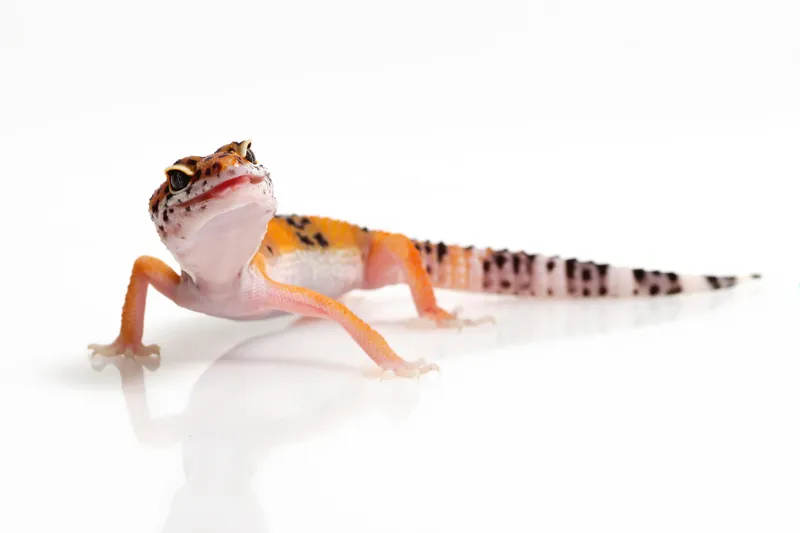
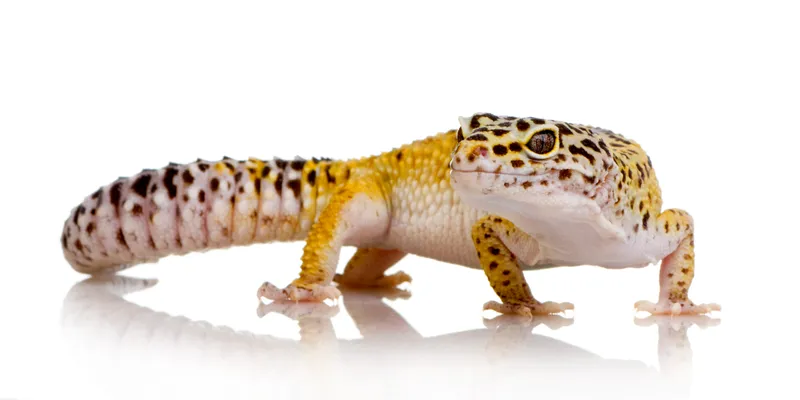
Leopard gecko
Eublepharis macularius
Nocturnal terrestrial lizard, docile. Starts activity at dusk.
Overview & key figures
Regulations
Not CITES-listed
ℹ️OPAn: minimum standards for nocturnal reptiles (multiple hides, heat gradient; UVB advisable). Individual housing common; keep basic records.
Lifespan
from 15 to 20years
Adult weight
from 50 to 100g
Lifestyle
Nocturnal / Terrestrial
Body temperature
Ectothermic
Sexual maturity
from 10 to 18months
Incubation
from 21 to 21days
ℹ️gestation
Litter / clutch size
from 2 to 2eggs
ℹ️per clutch
Habitat & environment
Type of housing
Terrarium made of glass or plexiglass (easy-to-clean, heat-retaining materials). Ventilation on each side of the terrarium is essential.
Substrate & bedding
Sandmat Exoterra®, kitchen paper, newspaper. Substrates that can be ingested (sand, soil, or those used for the humid hide) carry a risk of intestinal impaction: use only with certain precautions.
Lighting
Photoperiod : 12 h cycle
UVB
- UVB need : Recommended
- Lamp type : Low-intensity UVB fluorescent tube
- Recommended brands : X-ReptileReptile ExpertSolar RaptorArcadia
- Replacement : Every 6 months (UVB depletes before visible light)
- Leopard geckos are crepuscular, so in the wild they are also exposed to UVB. However, unlike bearded dragons for example, they can absorb calcium given as a dietary supplement without UVB radiation. With regular calcium intake, UVB is therefore not considered vital compared with some other lizard species; it is nonetheless appreciated, improves calcium absorption and best reproduces the gecko's natural environment.
- UVB does not pass through glass or plexiglass. Place the lamp inside the terrarium, under a protective grille. Direct sun behind a window pane is ineffective and may cause dangerous overheating.
Required equipment
- ✓ Several hides on the warm and cool sides
- ✓ Humid hide (sphagnum, vermiculite or a damp sponge) to aid shedding
- ✓ Shallow water dish
- ✓ Stones
- ✓ Branches
To avoid
- ⚠️ Heating plates
- ⚠️ Hot rocks
- ⚠️ Heat mats inside the terrarium
- ⚠️ Lamps too close to the animal and unprotected (risk of burns)
Technical parameters
| Hot spot | 30–32 °C |
| Cool spot | 20–25 °C |
| Humidity | 40–50 % |
Nutrition
Daily base
Strictly insectivorous: no fruit, vegetables or vertebrate prey. Vary the prey, feed the insects (gut-loading) and supplement with calcium/vitamins. Match the prey size (width ≤ distance between the eyes). Roaches (Dubia, lateralis) and black soldier fly larvae offer a good Ca:P ratio.
🦗 Insects
⏰ Feeding frequency
- • Juveniles: 4-5× per week
- • Adults: 2-3× per week
Supplements
- • Organic carrot juice can help prevent vitamin A deficiency.
- • Dust calcium powder onto the food 2-3× per week.
- • Reptile multivitamins: 2-4 times/month.
Treats
Keep fatty prey (wax moths, meal/superworms) as occasional treats.
Behaviour & socialisation
Social life
Solitary or small groups of females. Males fight. Male/female cohabitation not advised.
Activity cycle: Nocturnal, crepuscular.
Enrichment
- Hunting live insects
- Multiple hideouts (warm, cool, humid)
- Variety of ground textures
Health & prevention
Clinical warning signs
If any of these symptoms appear, prompt veterinary care is essential. Contact an exotic-pet vet as soon as possible — they can assess your animal's condition and make the appropriate diagnosis.
Common conditions
Vitamin A deficiency
Cause: Diet low in vitamin A
Symptoms: Eye problems, poor shedding, immune issues
Prevention: Organic carrot juice, vitamin supplements
Nutritional osteodystrophy
Cause: Calcium deficiency
Symptoms: Bone deformities, tremors, weakness
Prevention: Calcium supplementation
Key indicator of a food's mineral balance, especially in reptiles (tortoises, lizards): a calcium-favoured ratio supports bone and shell strength and helps prevent metabolic bone disease. In herbivorous mammals, mineral balance is managed differently (hay, supplementation, UV light) — these targets don't translate directly.
For insects (crickets, roaches…), a calcium powder at feeding time can offset an unfavourable ratio.
- ≥ 2 — Adequate balance
- 1–2 — In moderation
- < 1 — Avoid / occasional only
This food is above the 50,000 IU/kg dry matter threshold, making it a good vitamin A source.
Content : — IU/kg DM
Essential for mucous membranes, skin, feathers and vision. Deficiency: respiratory infections, dysecdysis, eye problems, drop in laying.