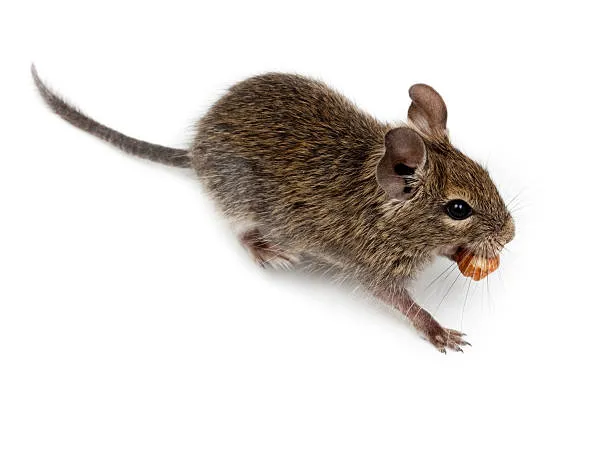
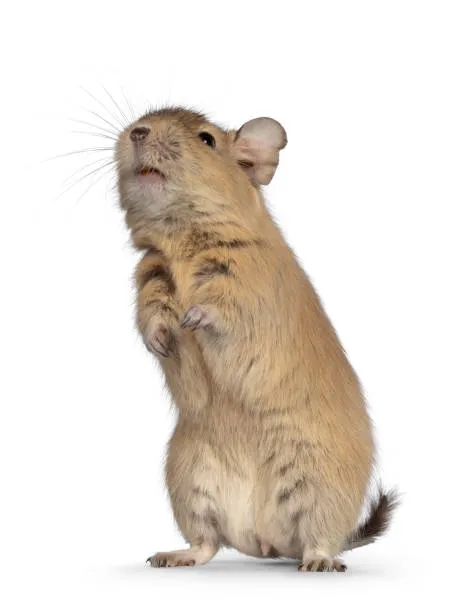
Degu
Octodon degus
Highly social, sensitive to environmental changes.
Overview & key figures
Regulations
Companion animal
ℹ️OPAn: mandatory group housing (social species), ample floor space/enrichment; gnawing material. Professional breeding/trade: competence required.
Lifespan
from 5 to 9years
Adult weight
from 200 to 300g
Lifestyle
Crepuscular / Diurnal
Body temperature
from 37.5 to 39°C
Sexual maturity
from 1.5 to 3months
ℹ️12 weeks (male), 6-8 weeks (female)
Gestation
from 87 to 93days
Litter / clutch size
from 1 to 12
ℹ️6 on average
Habitat & environment
Type of housing
Multi-level aviary, free from drafts
Substrate & bedding
Plant-based bedding (hemp, Nullodor® fir wood)
Lighting
Photoperiod : Natural cycle
Required equipment
- ✓ Sand bath (1 hr/day)
- ✓ Wheel (appropriate diameter)
- ✓ Tunnels
- ✓ Levels
- ✓ Branches to gnaw
- ✓ Hay rack
- ✓ Heavy food bowl
- ✓ Water bottle or heavy water bowl
Technical parameters
| Ambient temperature | 15–22 °C Optimal temperature |
Nutrition
Daily base
Strict herbivore. 80% high-quality hay and woody plants to wear down the teeth. Recommended brand: Oxbow (Chinchilla, Degu range).
🌿 Plants & herbs
🥕 Vegetables & greens
Dried vegetables and flowers (1 handful/day). Avoid fresh fruit and vegetables (too rich in sugar or water).
Supplements & pellets
<20 g/kg/day. NO seed mixes.
- 🟤 Pellets — Brands: Oxbow, Supreme Science, Beaphar, Versele Laga
Treats
Avoid anything too sugar-rich (raisins, dried bananas).
To avoid
- 🫘 Soy
- 🥑 Avocado
- 🥬 White Cabbage
- 🧅 Onion
- 🌿 Sorrel
- 🧄 Garlic
- 🥔 Potato
- 🍊 Peels
- 🍞 Bread
- 🍬 Sweets
- 🍫 Chocolate
- 🥣 Cereal Bars
Behaviour & socialisation
Social life
Must imperatively live in a group. Housing several males together can lead to fights.
Activity cycle: Active, requires at least 30 minutes of daily out-of-cage time.
Enrichment
- Sand bath
- Daily out-of-cage time
Health & prevention
Preventive medicine
Never grasp by the tail (risk of autotomy). Deworming if necessary.
Vaccination
None
Surgery & sterilisation
Castration (male) or spaying (female, not generally recommended).
Clinical warning signs
If any of these symptoms appear, prompt veterinary care is essential. Contact an exotic-pet vet as soon as possible — they can assess your animal's condition and make the appropriate diagnosis.