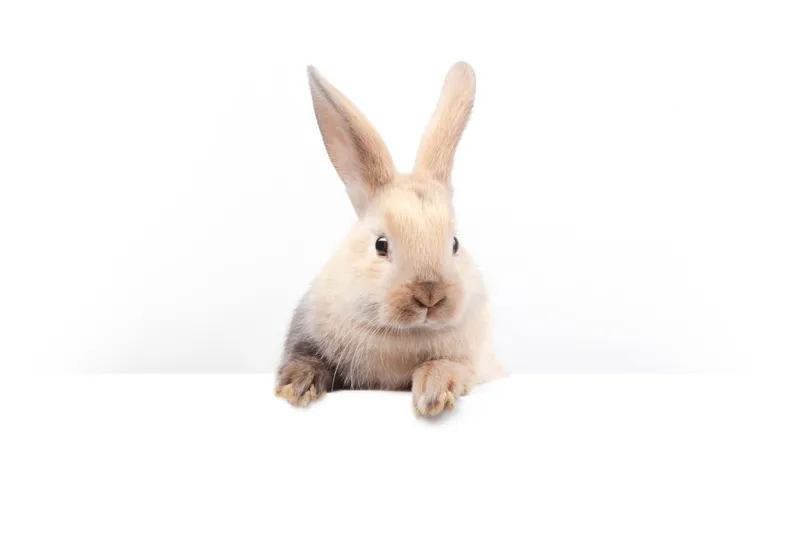
European rabbit
Oryctolagus cuniculus
The rabbit is a gregarious animal, very sensitive to environmental changes. It tolerates solitude poorly. Needs a consistent routine (feeding/care), ample space to move, and hideouts to feel safe. Sudden changes (noise, smells, moving the enclosure) are stressful.
Overview & key figures
Regulations
Companion animal
ℹ️OPAn: mandatory pair/group housing; minimum space, shelters, hiding areas; daily exercise. Larger holdings: health/marking duties may apply. Professional trade requires competence.
Lifespan
from 10 to 15years
Adult weight
from 1 to 10kg
ℹ️1 kg (dwarf) to 10 kg (giant)
Lifestyle
Diurnal
Body temperature
from 38.5 to 39.5°C
Sexual maturity
from 4 to 7months
ℹ️6–7 months (male), 4–6 months (female)
Gestation
from 28 to 34days
Litter / clutch size
from 2 to 6
Habitat & environment
Type of housing
Free roam, semi-free roam, enclosure or large cage with regular outings, sheltered from draughts
Substrate & bedding
Towels, DryBed®/VetBed®, Toftbo® mats, yoga mat or blanket. Plant-based bedding: Nullodor® (fir wood), hemp, recycled paper. Avoid cedar and pine.
Exercise & outings
At least 2–3 hours daily to stimulate gut transit and prevent obesity
Required equipment
- ✓ Hay rack
- ✓ Heavy food bowl
- ✓ Heavy water bowl (refresh daily). Low-lime/calcium water: risk of urinary sludge and stones.
- ✓ Hideout (small house, cardboard box, tunnel)
Nutrition
Recommended breakdown
- Hay & grass (staple food) 80 %
- Vegetables & greens 20 %
Daily base
Strict herbivore. Hay/grass ad libitum (80% of the ration). Provides dental wear and good digestibility.
🌿 Plants & herbs
🥕 Vegetables & greens
100 g/kg/day, at least 3 different ones per day. Prefer leafy greens.
Supplements & pellets
Pellets (uniform shape only — never seed mixes / muesli) should be given in small quantity: maximum 20 g/kg of body weight per day. For a 2 kg rabbit, that's about 1 tablespoon per day. For a rabbit that already eats hay ad libitum and varied fresh greens, pellets are not essential. Giving too much daily favours several problems: - Teeth: pellets are too soft to wear down teeth properly, which can lead to dental malocclusion. - Weight: their high caloric density favours overweight then obesity. - Digestion: imbalance of gut flora, slower transit, diarrhoea. In short: hay and greens first, pellets as a discrete supplement if needed.
- 🟤 Pellets
Treats
Not essential, rich in carbohydrates and sugars. Considered as treats. Can be given as enrichment, in small quantities, 1 to 2 times per week.
To avoid
- 🫘 Soy
- 🥑 Avocado
- 🥬 White Cabbage
- 🧅 Onion
- 🧄 Garlic
- 🌿 Sorrel
- 🥔 Potato
- 🍅 Tomato Leaves
- 🧅 Leek
- 🌿 Rhubarb
- 🍊 Peels
- 🍞 Bread
- 🍬 Sweets
- 🍫 Chocolate
- 🥣 Cereal Bars
- 🍇 Dried Fruits
Behaviour & socialisation
Social life
Gregarious. Do not house with guinea pigs (Bordetella risk, different needs). Ideally kept as a compatible pair/group; neutering helps reduce conflict and marking. Introduce gradually on neutral ground with supervision.
Activity cycle: Crepuscular/diurnally flexible: most active at dawn and dusk. Keep midday quiet. Provide daily safe exercise and foraging/chewing activities to prevent boredom.
Enrichment
- Scratching mat
- Species-appropriate toys
- Tunnels
- Cardboard boxes
Health & prevention
Preventive medicine
Deworming if symptomatic (faecal exam recommended). Encephalitozoon screening (blood test).
Vaccination
Rabbit haemorrhagic disease (RHD) is fatal. Vaccination recommended every 6 months (outdoor) or yearly (indoor). Myxomatosis: vaccine not authorised in Switzerland.
Surgery & sterilisation
Spaying (5 months) / castration (4–5 months). Prevents uterine tumours (50–80% of females over 4 years), aggression and marking.
Clinical warning signs
If any of these symptoms appear, prompt veterinary care is essential. Contact an exotic-pet vet as soon as possible — they can assess your animal's condition and make the appropriate diagnosis.
Common conditions
Dental malocclusion (incisors and molars)
Symptoms: Selective anorexia, hypersalivation, bruxism, weight loss, watery eyes
Prevention: Hay ad libitum, fibrous leafy greens, dental check 1–2×/year; avoid free-feeding pellets
Gastrointestinal stasis (ileus)
Symptoms: Reduced/no appetite and defecation, abdominal pain, hunched posture
Prevention: Very high-fibre diet (hay), hydration, pain and stress management; consult quickly if anorexia >12 h
Upper respiratory infections ("snuffles")
Symptoms: Sneezing, nasal discharge, conjunctivitis, abnormal breathing sounds
Prevention: Low-dust bedding, good ventilation, stress reduction; dental follow-up if chronic signs
Pododermatitis (sore hocks)
Symptoms: Redness/calluses/ulcers on the hocks, lameness, pain
Prevention: Soft, dry surfaces, clean bedding, weight control, padded resting areas
Urinary disorders (calcium sludge, cystitis, stones)
Symptoms: Thick/chalky urine, haematuria, straining to urinate, perineal soiling
Prevention: Constant access to water, activity, balanced diet (limit alfalfa in adults), weight control
Skin disorders and external parasites (Cheyletiella, fleas, fly strike in summer)
Symptoms: Dandruff/itching, areas of hair loss; in summer, possible infested wounds
Prevention: Coat hygiene, dry bedding, regular inspection (daily in summer), rabbit-safe antiparasitics