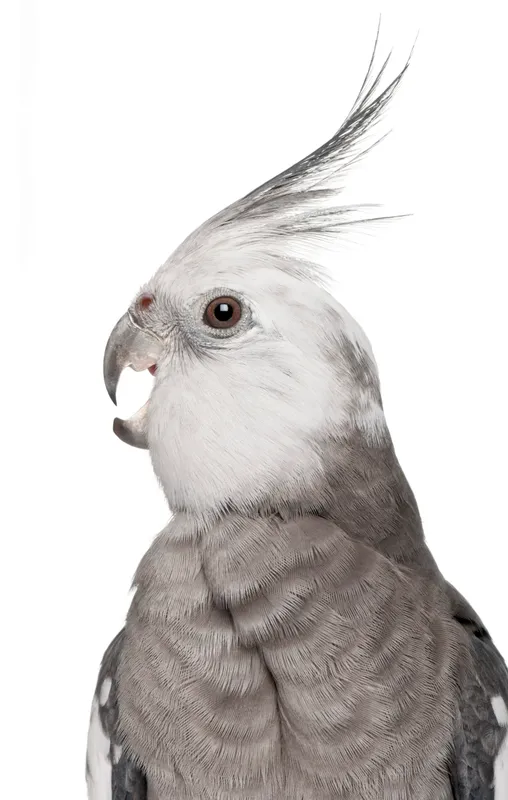
Parakeet
Psittaciformes
Social, lively, playful birds. Positive-reinforcement training is possible. Cockatiels in particular quickly learn a few words, whistles or tricks.
Overview & key figures
Regulations
Psittaciformes; CITES varies by species
ℹ️OPAn art. 13 annex 2: keep at least in pairs (social species). CITES App. I/II depending on species (permits for import/export). Minimum aviary sizes; enrichment/perches. Noise subject to local rules.
Lifespan
from 5 to 30years
ℹ️5–10 yrs (budgerigar), 15–20 yrs (cockatiel), 25–30 yrs (conure)
Adult weight
from 30 to 120g
ℹ️From 30 g (small) to 120 g (large)
Lifestyle
Diurnal
Body temperature
from 39 to 42°C
ℹ️When ill: keep the bird at 27–29 °C
Sexual maturity
from 6 to 24months
ℹ️6–12 months (small), 2 years (sun conure)
Incubation
from 18 to 27days
ℹ️18–27 days depending on species
Litter / clutch size
from 3 to 6eggs
ℹ️3–6 eggs on average
Habitat & environment
Type of housing
Cage or aviary as large as possible, never round. Place away from kitchen and drafts. Use easy-to-clean materials; avoid galvanized (zinc-containing) metals.
Substrate & bedding
Low-dust substrate: newspaper, absorbent pad or kitchen paper. Loose bedding (hemp, cellulose) only in large, well-ventilated setups.
Lighting
Photoperiod : 5–6 h in winter, 6–7 h in spring/autumn, 7–8 h in summer. Do not confuse with sleep duration (see Behaviour).
UVB
- UVB need : Required (vitamin D synthesis, calcium absorption)
- Lamp type : Bird-specific UV lamp (sensitive avian eye: avoid reptile lamps, strobe effect)
- Recommended brands : Arcadia Bird LampZoo Med AvianSun
- Replacement : Yearly
- UVB does not pass through glass or plexiglass. Place the lamp inside the terrarium, under a protective grille. Direct sun behind a window pane is ineffective and may cause dangerous overheating.
Exercise & outings
Daily outings in a secured room (windows closed, mirrors covered, other pets away). Free flight recommended. Involve the bird in household activities rather than excessive petting.
Required equipment
- ✓ Natural-wood perches of varying diameters (toes covering 2/3 to 3/4 of the circumference)
- ✓ Natural branches to chew
- ✓ Multiple feeding stations (encourage foraging)
- ✓ Fresh water changed daily
- ✓ Educational and puzzle toys (foraging)
- ✓ Foraging mat (especially appreciated by cockatiels)
- ✓ Lukewarm bath or shower 2–3×/week
- ✓ Hygrometer to monitor humidity (target 50–55 %)
To avoid
- ⚠️ Round cages (disorientation)
- ⚠️ Galvanized (zinc-containing) metals (cheap cages, bells, hardware)
- ⚠️ Sandpaper-covered perches (footpad lesions)
- ⚠️ Non-stick cookware in adjacent kitchen (PTFE)
- ⚠️ Scented candles, room sprays, air fresheners in the same room
- ⚠️ Accessible electric cables
Technical parameters
| Ambient temperature | 18–25 °C Comfortable for humans; 27–29 °C if the bird is unwell. |
| Humidity | 50–55 % Maintain with baths or showers; hygrometer recommended. |
Environmental hazards & toxins
Species that spend time free-roaming in the home or aviary can be exposed to these everyday hazards. Indicative list — check case by case.
Heavy metals
- ⚠️ Lead — Stained glass, old paints, curtain rods, jewelry, solder, old venetian blinds, linoleum
- ⚠️ Zinc — Galvanized cage metal, hardware, toys (bells, mirrors), old coins
Fumes & gases
- 🍳 Teflon / PTFE — Non-stick pans, air fryers, irons, raclette/crêpe makers, self-cleaning ovens
- 🚬 Cigarette smoke — Inhaled/ingested tobacco; nicotine via skin contact (hands)
- 💨 Marijuana smoke — Inhaled or ingested cannabis
- ☠️ Carbon monoxide — Exhaust fumes, faulty heaters, poorly drafted fireplaces
Chemicals
- 🕯️ Scented products (candles, sprays, air fresheners) — Scented candles, room sprays, air fresheners, perfumes, deodorants
- 🧴 Household cleaners — Ammonia, bleach, detergents, chlorine disinfectants, degreasers
- 💅 Cosmetics (nail polish, hairspray, dyes) — Nail polish, nail polish remover, hairspray, dyes, aerosol hair products
- 🪰 Household insecticides — Fly sprays, mosquito diffusers, plug-ins, chemical antiparasitics
- 🧪 Mothballs (naphthalene, paradichlorobenzene) — Anti-moth sachets and balls in closets and cupboards
- 🎨 Paints, varnishes, polyurethane — Fresh painting, polyurethane foam, varnishes and solvents
Appliances & equipment
- 🍽️ Overheated plastics — Plastic containers heated or melted in microwave, burnt food containers
- 🔌 Electric cables — Accessible 230 V AC cables, unprotected outlets
Plants
- 🌸 Lily — Lilies of all varieties (bouquets, houseplants)
- 🌺 Oleander — Oleander (garden, balcony)
- 🌲 Yew — Common yew (hedges, gardens)
- 🔔 Lily of the valley — Lily of the valley (bouquets, garden)
- 🌳 Oak (acorns and leaves) — Acorns and oak leaves
- 🌸 Foxglove — Purple foxglove, ornamental plants
- 🌺 Rhododendron / azalea — Rhododendrons, azaleas (garden, ornamental plants)
- 🌸 Kalanchoe — Kalanchoes (popular houseplants)
- 🪴 Dumb cane (Dieffenbachia) — Dieffenbachia (houseplant)
- 🪴 Umbrella plant (Schefflera) — Schefflera (houseplant)
- 🌿 Crown vetch — Crown vetch (wild plant)
- 🌸 Lantana — Lantana (ornamental plant, balconies)
- 🌿 Rhubarb leaves — Rhubarb leaves (garden)
Nutrition
The information given here is a general reference. Each bird has specific nutritional needs that vary with species, age, health and lifestyle.
Recommended breakdown
- Pellets 60 %
- Vegetables & fruit 35 %
- Seeds & nuts 5 %
Daily base 55–60 %
Balanced omnivore diet combining quality extruded pellets, fresh vegetables/fruit and a moderate share of seeds. Parakeets keep a higher plant share than large parrots, and seed intake stays controlled.
🪵 Pellets
🥕 Vegetables & greens 15–20 % (+ 15–20 % de fruits)
Higher plant share than in large parrots. Favour vegetables (fruit is sugary). Vary sources for vitamin A.
⏰ Feeding frequency
- • Fresh meals (vegetables/fruit) morning and evening
- • Pellets available throughout the day (ideally via foraging)
- • Seeds as rewards only, not free-choice
- • Fresh water changed daily
Supplements & pellets
Complete extruded pellets as the daily staple.
- 🟤 Pellet
Treats 5 %
Small seeds, nuts and occasional protein sources. Seeds must remain a treat — even for parakeets, who love them.
Vitamin A
Vitamin A is essential for epithelial tissues (eyes, skin, feathers, respiratory tract, reproductive and digestive organs). Deficiency causes squamous metaplasia: loss of barrier function, predisposition to infections and tumours. Main sources: dark leafy greens, watercress, dandelion, romaine, spinach, mango, papaya, apricot, melon.
Diet transition
Particularly relevant for parakeets, who are often raised on all-seed diets. The shift to a varied diet (pellets + vegetables/fruit + seeds as treats) must be gradual.
Duration : At least 1 week, often several weeks depending on the bird's habits.
Steps :
- Gradually reduce the amount of seeds available.
- Mix pellets into the seeds, then move them to a separate dish.
- Offer finely cut fresh vegetables/fruit several times a day.
- Increase variety until reaching 55–60 % pellets / 30–40 % veggies-fruit / 5 % seeds.
Tips :
- Hide pellets inside a favourite food.
- Mimicry effect: have another bird (or the owner) eat pellets in front of the bird.
- Use Nutri-Berries® during the transition (seeds + pellets + vegetables/fruit blends).
- Deliver part of the ration via foraging toys.
Warnings :
- Never withdraw seeds abruptly: possible hunger strike.
- Daily weighing during the transition (loss > 10 % = vet consultation).
- Sprouted seeds: mould risk (aspergillosis).
To avoid
Toxic or strongly discouraged foods. Fruit pips and stones contain small amounts of cyanide — remove on principle.
- 🍫 Chocolate — Théobromine : cardiotoxique.
- 🥑 Avocado — Persine : cardiotoxique, mortel.
- 🧅 Onion — Anémie hémolytique.
- 🧄 Garlic — Anémie hémolytique.
- 🍎 Apple Seeds — Cyanure (pépins et noyaux de pomme, abricot, pêche, cerise, prune).
- 🌿 Rhubarb — Acide oxalique.
- 🍬 Sweets — Xylitol et sucres — toxiques (xylitol particulièrement).
Behaviour & socialisation
Social life
Very social; the Swiss Animal Welfare Ordinance (art. 13 annex 2) requires keeping at least two individuals. Prefer a pair or small group over a lone bird.
Activity cycle: Diurnal, strong activity during the day, peaks at sunrise and sunset.
Sleep & rest : 10–12 h of uninterrupted sleep per night, in darkness and quiet. No television or stimulation in the evening. Chronic sleep deprivation compromises mental and physical health.
Enrichment
- Foraging: essential
- Positive-reinforcement training (clicker)
- Branches, pine cones, natural ropes to chew
- Foraging mat for cockatiels
- Baths or showers 2–3×/week
- Daily outings outside the cage in a secured environment
Foraging
Natural food-search behaviour. Must be exercised daily to prevent boredom, plucking and overeating. Cockatiels and budgerigars especially enjoy foraging mats.
Time in the wild : 6–8 h per day in the wild
Techniques :
- Offer larger pellets so the bird has to break them apart
- Distribute the ration to multiple spots in the cage
- Foraging mat (cockatiels, budgerigars): scatter food in the weave
- Puzzle toys (commercial or DIY)
- Hiding spots: seeds/pellets in paper balls, cardboard boxes
- Cover the food bowls so the bird has to destroy the wrapping
Health & prevention
Preventive medicine
Annual exam recommended. At least 1 month of quarantine for any new arrival (targeted PCR: PBFD, polyomavirus, chlamydiosis). Weekly home weighing. Yearly UV lamp replacement.
Surgery & sterilisation
Common procedures: mass excision (lipomas common in budgerigars), egg retention surgery, cloacal prolapse correction, wound debridement.
Clinical warning signs
If any of these symptoms appear, prompt veterinary care is essential. Contact an exotic-pet vet as soon as possible — they can assess your animal's condition and make the appropriate diagnosis.
Common conditions
Vitamin A deficiency
Cause: Seed-dominated diet, lack of greens
Symptoms: Abscesses, oral granulomas, nasal discharge, periocular swelling, dyspnea, poor feather quality
Prevention: Variety of vitamin-A-rich greens; transition to pellets
Obesity / lipomas (budgerigar)
Cause: Too many fatty seeds (sunflower), lack of exercise
Symptoms: Overweight, subcutaneous abdominal masses, dyspnea
Prevention: Limit sunflower seeds, encourage foraging, increase free flight
Feather plucking
Cause: Lack of stimulation, boredom, stress, nutritional deficits, medical issues
Symptoms: Pulled feathers (body, wings), skin lesions
Prevention: Daily foraging, out-of-cage time, social interaction, dietary variety
Pododermatitis (bumblefoot)
Cause: Uniform perches, obesity, sandpaper-covered perches
Symptoms: Footpad lesions, lameness
Prevention: Natural-wood perches of varying diameters; weight management
Respiratory diseases (chlamydiosis, aspergillosis)
Cause: Inappropriate humidity, fumes (PTFE, tobacco), mouldy seeds, stress
Symptoms: Dyspnea, open-mouth breathing, nasal discharge
Prevention: Maintain 50–55 % humidity, avoid fumes, don't feed mouldy seeds
Household poisonings
Cause: Overheated PTFE, lead/zinc, fumes, toxic plants, chemicals
Symptoms: Acute respiratory distress, sudden death (PTFE), neurological signs
Prevention: Avoid PTFE and zinc-galvanized metal, safe houseplants, away from kitchen
This food is above the 50,000 IU/kg dry matter threshold, making it a good vitamin A source.
Content : — IU/kg DM
Essential for mucous membranes, skin, feathers and vision. Deficiency: respiratory infections, dysecdysis, eye problems, drop in laying.