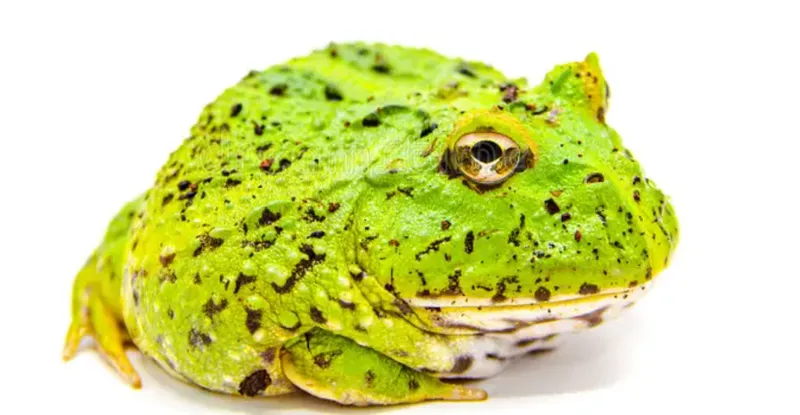
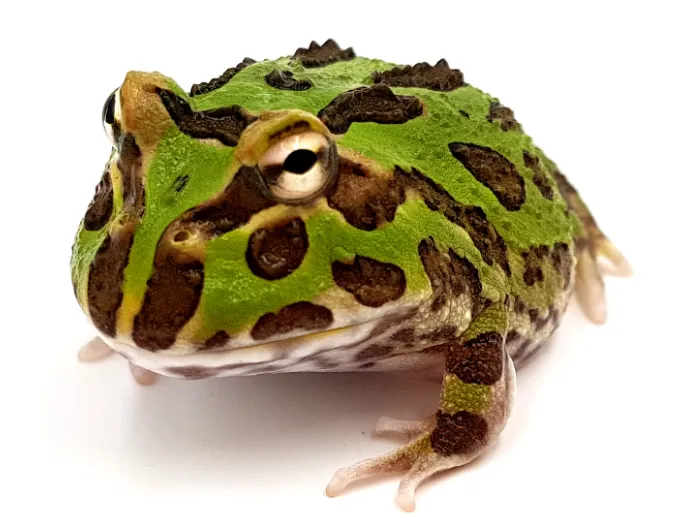
Pacman frog
Ceratophrys cranwelli
Sedentary, territorial and solitary. Spends its time buried or hidden.
Overview & key figures
Regulations
Not CITES-listed
ℹ️OPAn: amphibian standards (humidity/substrate, water quality, stocking). Release prohibited; proof of origin recommended. Professional trade requires competence.
Lifespan
from 10 to 15years
Adult size
from 10 to 15cm
ℹ️10 cm (male) to 15 cm (female)
Lifestyle
Burrower / Ambush predator
Sexual maturity
from 1 to 2years
Incubation
from 24 to 48hours
ℹ️Depending on temperature
Litter / clutch size
from 1000 to 4000eggs
ℹ️Depending on the female's size and age
Habitat & environment
Type of housing
Closed but well-ventilated terrarium
Substrate & bedding
Coco fibre/soil (10-15 cm), clean and slightly moist
Lighting
Photoperiod : Low to moderate, 12/12 cycle
UVB
- UVB need : Not essential; beneficial when diet is well supplemented
- Intensity : UVB 2–5 %
- Lamp type : Low-intensity UVB fluorescent (2–5%) + daylight LED for the cycle
- Recommended brands : X-ReptileReptile ExpertSolar RaptorArcadia
- Replacement : Every 6 months (UVB depletes before visible light)
- UVB does not pass through glass or plexiglass. Place the lamp inside the terrarium, under a protective grille. Direct sun behind a window pane is ineffective and may cause dangerous overheating.
Required equipment
- ✓ Mesh lid
- ✓ 1-2 dark, stable hideouts
- ✓ Shallow water dish (easy access, low rim)
- ✓ Artificial plants tolerated
Technical parameters
| Hot spot | 24–28 °C Daytime |
| Humidity | 60–80 % Relative humidity |
| ph | Eau déchlorée |
| gh | Changement quotidien |
| no2 | N/A |
| no3 | N/A |
| nh4 | N/A |
| po4 | N/A |
Nutrition
Daily base
Pacman frogs are opportunistic carnivores. They are known for their voracity and their ability to swallow large prey.
🦗 Insects
⏰ Feeding frequency
- • Juveniles (up to ~12 months): 4-5 meals per week
- • Adults: every 2-3 days (adjust to body condition)
Supplements & pellets
Prefer moving prey or tong feeding for stimulation.
Treats
Tong feeding recommended. Do not offer prey wider than the head.
To avoid
- 🐾 Dead Prey — Avoid unless presented with tong stimulation.
- 🥩 Mammal Meat — Too fatty, poorly digested.
- 🍗 Chicken — Too fatty.
Behaviour & socialisation
Social life
Solitary (territorial)
Activity cycle: Sedentary
Enrichment
- Deep substrate for burrowing
- Shaded areas
- Misting 1-2× per day
Health & prevention
Preventive medicine
Limit handling (stressful). Use rinsed/wet hands or moistened nitrile gloves. May bite if threatened.
Clinical warning signs
If any of these symptoms appear, prompt veterinary care is essential. Contact an exotic-pet vet as soon as possible — they can assess your animal's condition and make the appropriate diagnosis.
Common conditions
Respiratory issues
Cause: Humidity too low or unsuitable ventilation
Symptoms: Breathing difficulties
Prevention: Maintain a suitable environment
Parasitism
Cause: Infested prey
Symptoms: Variable
Prevention: Periodic faecal analyses, healthy prey
Obesity
Cause: Rodents fed too regularly
Symptoms: Excessive weight gain
Prevention: Favour varied insects, control feeding frequency
Dysecdysis (poor shedding)
Cause: Inadequate humidity
Symptoms: Remnants of dead skin
Prevention: Correct humidity and access to water dish
Stomatitis and impaction
Cause: Prey too large or substrate ingestion
Symptoms: Oral inflammation / obstruction
Prevention: Tong feed, size prey appropriately
Dermatoses and red-leg
Cause: Poor hygiene, dirty water
Symptoms: Bacterial dermatitis / septicaemia
Prevention: Sanitation, daily clean water