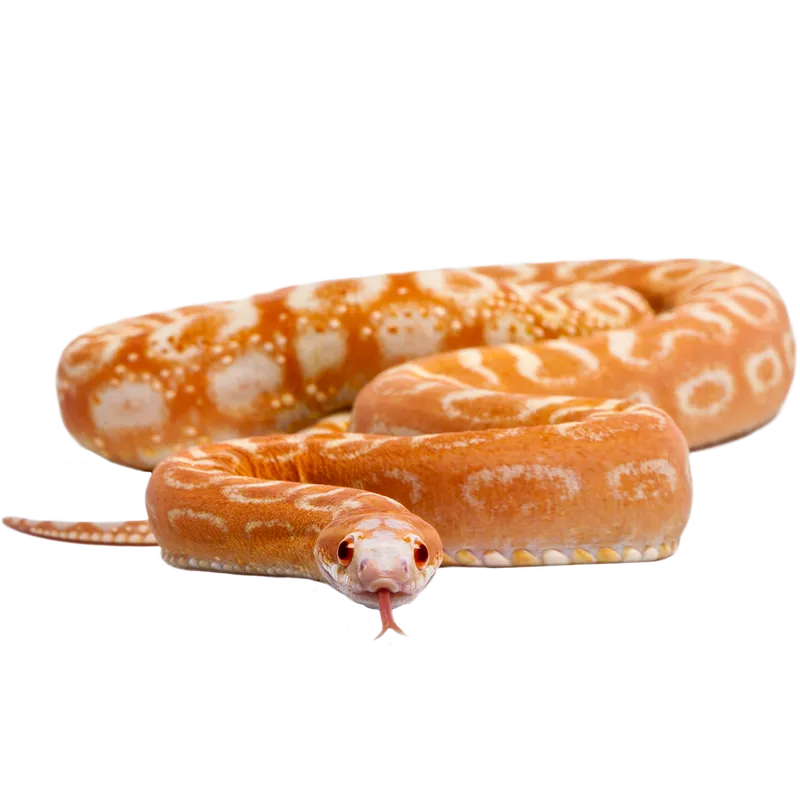
Corn snake
Pantherophis guttatus
Discreet, docile snake; tolerates brief handling; enjoys hiding and light burrowing.
Overview & key figures
Regulations
Not CITES; non-domestic reptile
ℹ️OPAn: reptile minimum standards (size, hides, escape-proof). Cantonal/municipal permits may apply. Release prohibited; keep proof of origin.
Lifespan
from 12 to 20years
ℹ️Median 15-18 years in captivity
Adult weight
from 300 to 900g
ℹ️Depending on sex, line and body condition
Adult size
from 80 to 150cm
ℹ️Total length, most 100-130 cm
Lifestyle
Crepuscular, nocturnal
Sexual maturity
from 18 to 36months
ℹ️Later maturity in females (≥2 years and sufficient weight)
Incubation
from 55 to 70days
ℹ️Egg incubation at 27-29 °C
Litter / clutch size
from 8 to 20eggs
ℹ️Typical clutches of 10-16 eggs
Habitat & environment
Type of housing
Ventilated terrestrial terrarium with thermal gradient and multiple hideouts
Substrate & bedding
Aspen shavings, sterile soil/sand, absorbent paper; avoid dusty or aromatic substrates.
Lighting
Photoperiod : 10–12 h/day
UVB
- UVB need : Not essential but beneficial
- Lamp type : Low-intensity UVB fluorescent tube (UVI 0.5–1)
- Recommended brands : X-ReptileReptile ExpertSolar RaptorArcadia
- Replacement : Every 6 months (UVB depletes before visible light)
- UVB does not pass through glass or plexiglass. Place the lamp inside the terrarium, under a protective grille. Direct sun behind a window pane is ineffective and may cause dangerous overheating.
Indirect daylight.
Exercise & outings
Enriched setup encouraging exploration; occasional secure handling sessions.
Required equipment
- ✓ Hideouts at the warm and cool spots
- ✓ Wide water bowl (allows soaking)
- ✓ Branches/low basking shelf
- ✓ Heat mat/heating controlled by thermostat
- ✓ Thermometers and hygrometer
- ✓ Adequate ventilation
Technical parameters
| Hot spot | 30–32 °C Ground-level basking spot (surface), thermostat mandatory |
| Cool spot | 22–25 °C Stable cool zone |
| Ambient temperature | 24–28 °C Ideal horizontal gradient |
| Humidity | 40–60 % Humid hide at 70-80% during shedding |
Nutrition
Daily base
Strict carnivore: thawed captive-bred rodents sized to the snake's widest girth.
🥩 Proteins
⏰ Feeding frequency
- • Juveniles: 1 prey item every 5-7 days
- • Subadults: every 7-10 days
- • Adults: every 10-14 days; adjust based on BCS/season
Treats
Occasional and non-essential: day-old captive-bred chicks.
To avoid
- 🐁 Live prey — No live prey without supervision (bite risk)
- 🐀 Wild-caught rodents — Parasite/pathogen risk
- 📦 Processed food — Processed human foods (deli meats, etc.) prohibited
Behaviour & socialisation
Social life
Solitary species; avoid cohabitation outside of breeding.
Activity cycle: Crepuscular/nocturnal; daytime activity varies with the environment.
Enrichment
- Multiple hideouts of varied texture/size
- Low branches and climbing areas
- Burrowable substrate
- Varied terrain and scents
Health & prevention
Preventive medicine
Quarantine new arrivals (≥ 60 days), parasite screening (faecal, smear), terrarium hygiene, strict control of thermal gradients and humidity, weight management.
Vaccination
No routine vaccinations
Surgery & sterilisation
Ovariosalpingectomy for dystocia/follicular stasis, foreign-body removal, abscess debridement, stomatotomy for severe stomatitis.
Clinical warning signs
If any of these symptoms appear, prompt veterinary care is essential. Contact an exotic-pet vet as soon as possible — they can assess your animal's condition and make the appropriate diagnosis.
Common conditions
Bacterial respiratory infections
Cause: Chronic hypothermia, inadequate humidity, opportunistic pathogens (Pseudomonas, Aeromonas, etc.)
Symptoms: Nasal discharge, wheezing, open-mouth breathing, lethargy
Prevention: Correct thermal gradient, hygiene, quarantine and screening of new arrivals
Stomatitis (mouth rot)
Cause: Oral trauma, poor hygiene, immunosuppression, opportunistic bacteria
Symptoms: Gingival erythema, caseous exudate, oral pain, anorexia
Prevention: Hygiene, husbandry monitoring, prompt treatment of injuries
Dysecdysis and retained spectacles
Cause: Inadequate humidity, dehydration, ectoparasites, husbandry deficiencies
Symptoms: Incomplete shed, retained rings, persistent eye opacity
Prevention: Adequate humidity, humid hide during shedding, occasional soaking
Internal parasites (nematodes, coccidia, Cryptosporidium spp.)
Cause: Contaminated prey/animals, lack of quarantine
Symptoms: Weight loss, diarrhoea, regurgitation, reduced appetite
Prevention: Strict quarantine, regular faecal screens, hygiene of feeding equipment
Reptile mites (Ophionyssus natricis)
Cause: Introduction of infested animals/equipment
Symptoms: Pruritus, restlessness, skin lesions, anaemia, dysecdysis
Prevention: Quarantine, systematic inspection, environmental treatment
Constipation/obstipation and regurgitation
Cause: Temperatures too low, prey too large, handling after feeding, dehydration
Symptoms: Prolonged absence of faeces, distension, post-prandial vomiting/regurgitation
Prevention: Appropriately sized prey, rest after feeding, optimal temperature, hydration
Key indicator of a food's mineral balance, especially in reptiles (tortoises, lizards): a calcium-favoured ratio supports bone and shell strength and helps prevent metabolic bone disease. In herbivorous mammals, mineral balance is managed differently (hay, supplementation, UV light) — these targets don't translate directly.
For insects (crickets, roaches…), a calcium powder at feeding time can offset an unfavourable ratio.
- ≥ 2 — Adequate balance
- 1–2 — In moderation
- < 1 — Avoid / occasional only
This food is above the 50,000 IU/kg dry matter threshold, making it a good vitamin A source.
Content : — IU/kg DM
Essential for mucous membranes, skin, feathers and vision. Deficiency: respiratory infections, dysecdysis, eye problems, drop in laying.