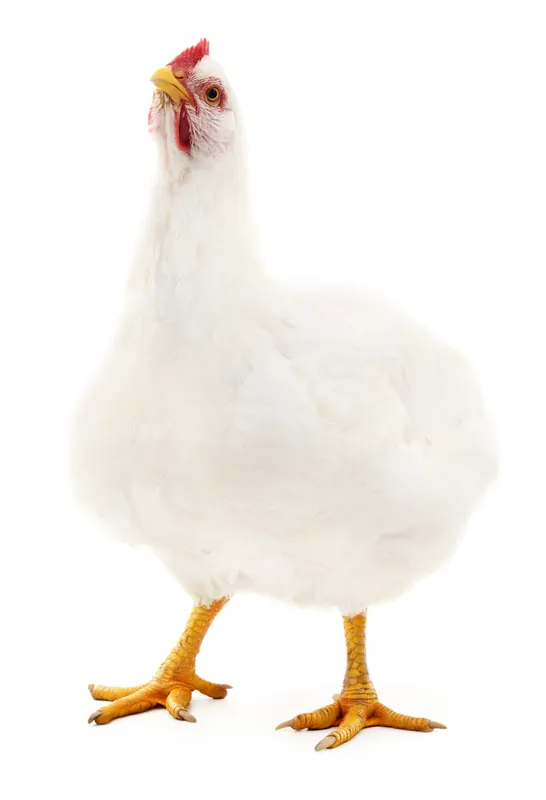
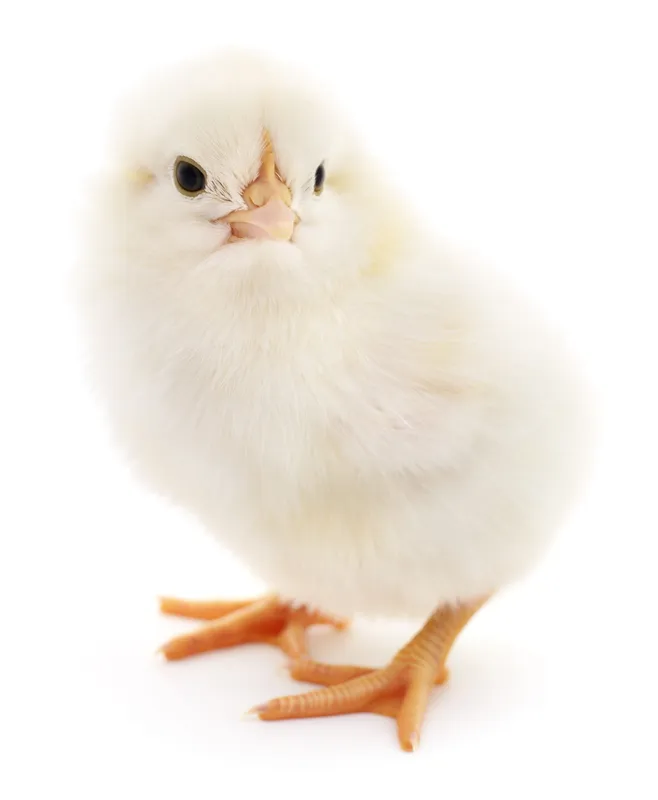
Chicken
Gallus gallus domesticus
Highly social and expressive animal. Strict flock hierarchy (pecking order) established by brief confrontations; group changes must be gradual. Active in early morning and late afternoon; siesta/dust bath at midday. Varied vocalisations (laying song, alarm call, contentment cluck).
Overview & key figures
Regulations
Domestic livestock/pet
ℹ️OPAn: minimum standards (space, perches, light, litter); group housing. Registration/reporting may apply for flocks. Cantonal/municipal rules for roosters and nuisance.
Lifespan
from 5 to 10years
ℹ️5–10 years on average; rustic breeds up to 12 years, hybrid layers often shorter (3–5 years).
Adult weight
from 1.5 to 4kg
ℹ️Highly breed-dependent: bantam ~0.8 kg, layer 1.8–2.5 kg, heavy breed (Brahma, Orpington) 3–5 kg.
Adult size
from 30 to 70cm
ℹ️Withers height 30–50 cm; large breeds (Brahma) up to 70 cm.
Lifestyle
Diurnal, ground-dwelling flock animal
Body temperature
from 40.5 to 42.5°C
ℹ️High body temperature; 40.5–42.5 °C considered normal.
Sexual maturity
from 5 to 7months
ℹ️5–7 months depending on breed (earlier in hybrid layers, later in heavy breeds).
Incubation
from 21 to 21days
ℹ️Natural or artificial incubation of 21 days at 37.5–37.8 °C.
Litter / clutch size
Up to 28 eggs/month in good layers; strong seasonality in rustic breeds.
Habitat & environment
Type of housing
Enclosed coop + outdoor run. Non-porous materials (easy to clean/disinfect); ventilation without drafts; insulation against humidity and temperature extremes. Sheltered from prevailing winds, away from kitchens and drafts.
Substrate & bedding
Straw, hay, non-resinous shavings or hemp. Dry, low-dust, renewed regularly. Washable mats (Drybed®, vinyl) in the sleeping area can reduce dust.
Lighting
Photoperiod : Natural light. 14–16 h photoperiod for continuous laying; in winter natural reduction to 8–10 h. Optional artificial supplement (timer) for 12–14 h, balanced with rest.
UVB
- UVB need : Beneficial (vitamin D synthesis, eggshell quality); natural sun access usually sufficient
- Lamp type : Bird-specific UV lamp only if the coop is indoors without sun access
- Recommended brands : Arcadia Bird LampZoo Med AvianSun
- Replacement : Yearly
- UVB does not pass through glass or plexiglass. Place the lamp inside the terrarium, under a protective grille. Direct sun behind a window pane is ineffective and may cause dangerous overheating.
Exercise & outings
Daily access to an outdoor run, ideally divided into multiple rotating zones to preserve vegetation. Avoid tall grass (crop impaction risk) and standing water.
Required equipment
- ✓ Untreated natural-wood perches (Ø 4–5 cm, rounded), 18–20 cm linear per hen, 50–80 cm off the ground, spaced 30 cm apart
- ✓ Dark, quiet nesting boxes: 1 for 4–5 hens; about 30×30×35 cm, clean straw/hay
- ✓ Anti-waste feeders (linear or hopper) at back height
- ✓ Clean drinkers (changed daily) at multiple points; heated in winter
- ✓ Free-choice calcium source (crushed oyster shells, cuttlebone)
- ✓ Bowl/box of grit/gastroliths (small pebbles) for the gizzard
- ✓ Dust bath (fine dry sand, soil, sieved wood ash)
- ✓ Automatic pop-door (e.g. ChickenGuard®)
- ✓ High ventilation vent (removes ammonia and moisture) without direct drafts
To avoid
- ⚠️ Smooth plastic or cold metal perches (slippery, footpad problems, frostbite)
- ⚠️ Sandpaper-covered perches
- ⚠️ Resinous shavings (pine, fir) in large amounts (airway irritation)
- ⚠️ Barbecue ash (chemical residues) in the dust bath
- ⚠️ Scented products/aerosols in the coop
- ⚠️ PTFE non-stick cookware in adjacent kitchen
- ⚠️ Accessible electric cables in the run
- ⚠️ Floor heat plates (burn risk)
Technical parameters
| Ambient temperature | 5–25 °C Tolerates 5–25 °C; caution > 28 °C (heatstroke) and < 0 °C with humidity (comb/wattle frostbite). |
| Humidity | 50–70 % Well-ventilated coop; avoid > 75 % (mould, aspergillosis) and < 40 % (dust). |
Environmental hazards & toxins
Species that spend time free-roaming in the home or aviary can be exposed to these everyday hazards. Indicative list — check case by case.
Heavy metals
- ⚠️ Lead — Stained glass, old paints, curtain rods, jewelry, solder, old venetian blinds, linoleum
- ⚠️ Zinc — Galvanized cage metal, hardware, toys (bells, mirrors), old coins
Fumes & gases
- 🍳 Teflon / PTFE — Non-stick pans, air fryers, irons, raclette/crêpe makers, self-cleaning ovens
- ☠️ Carbon monoxide — Exhaust fumes, faulty heaters, poorly drafted fireplaces
- 🍞 Mycotoxins (moulds) — Aflatoxins, ochratoxin, DON, zearalenone: damp-stored grain, wet litter, poorly preserved silage
- ☠️ Botulism (Clostridium botulinum) — Decaying carcasses (rodents/birds) in the run, open compost, fermented food waste, stagnant water
Chemicals
- 🐀 Rodenticides — Anticoagulants (warfarin, brodifacoum), bromethalin, cholecalciferol, strychnine; pellet/block baits, or poisoned dead rodents
- 🐌 Slug bait (metaldehyde) — Blue slug pellets in gardens and vegetable plots
- 🚫 Fipronil — Cat/dog antiparasitics (Frontline®, sprays), poultry mite treatments
- 🪰 Household insecticides — Fly sprays, mosquito diffusers, plug-ins, chemical antiparasitics
- 🌱 Herbicides & chemical fertilisers — Glyphosate, moss killer, fertiliser pellets, blood meal, bone meal; freshly applied baits/powders on lawn
- 🛢️ Hydrocarbons & solvents — Kerosene, petrol, used oil, thinners, white spirit, antifreeze; puddles near workshops or garages
- 🧂 Salt & salty water — Cattle salt licks, softener water, melted road-salt water, salty scraps (cold cuts, crisps)
- 🧴 Household cleaners — Ammonia, bleach, detergents, chlorine disinfectants, degreasers
- 🧪 Mothballs (naphthalene, paradichlorobenzene) — Anti-moth sachets and balls in closets and cupboards
- 🎨 Paints, varnishes, polyurethane — Fresh painting, polyurethane foam, varnishes and solvents
Appliances & equipment
- 🔌 Electric cables — Accessible 230 V AC cables, unprotected outlets
Plants
- 🌸 Lily — Lilies of all varieties (bouquets, houseplants)
- 🌺 Oleander — Oleander (garden, balcony)
- 🌲 Yew — Common yew (hedges, gardens)
- 🔔 Lily of the valley — Lily of the valley (bouquets, garden)
- 🌳 Oak (acorns and leaves) — Acorns and oak leaves
- 🌸 Foxglove — Purple foxglove, ornamental plants
- 🌺 Rhododendron / azalea — Rhododendrons, azaleas (garden, ornamental plants)
- 🌸 Kalanchoe — Kalanchoes (popular houseplants)
- 🌸 Lantana — Lantana (ornamental plant, balconies)
- 🌿 Rhubarb leaves — Rhubarb leaves (garden)
- 🌳 Cherry laurel & Prunus species — Cherry-laurel hedges, leaves/stones of cherry, plum, apricot, peach (pruning thrown in the run)
- 🌿 Castor bean (Ricinus communis) — Ornamental plant (highly decorative red/green leaves), mottled seeds
- 🌸 Datura & deadly nightshade — Datura (angel's trumpet), deadly nightshade, black nightshade, henbane — weeds and ornamental plants
- 🌿 Hemlock — Poison hemlock, fool's parsley, water hemlock — ditches, wet meadows
- 🌸 Hydrangea — Potted and garden hydrangeas (popular blue/pink blooms)
- 🍁 Red maple (wilted leaves) — Wilted red maple leaves (autumn fall, prunings); especially toxic when dry
Nutrition
Recommended breakdown
- Cereals 65 %
- Protein 25 %
- Vegetables & fruit 10 %
Daily base
Omnivore diet: 65 % cereals (prefer cracked; avoid all-pellet), 25 % protein (insects, legumes, animal complement in winter), 10 % vitamin-A-rich vegetables/fruit. Free-choice calcium and grit are essential.
🌾 Grains
🥕 Vegetables
🍴 Other
🦗 Insects
🥩 Proteins
🌻 Seeds
🥕 Vegetables & greens 10 %
10 % of the ration. Favour vitamin-A-rich dark leafy greens (dandelion, watercress, spinach, romaine, turnip greens). Chop finely. No seasoning or added fats.
⏰ Feeding frequency
- • 2 meals/day (morning + afternoon) in an amount eaten within 15–20 min
- • Calcium and grit permanently free-choice
- • Fresh water available at all times
- • Greens served freshly cut, remove leftovers at the end of the day
Supplements & pellets
Commercial compound feed (pellets/mash) acceptable as a base if cracked cereals are hard to source. Choose layer feed 16–18 % protein, enriched with calcium/vitamins.
- 🟤 Pellets — Aliment pondeuse complet, riche en calcium.
Treats
Occasional treats: oilseeds (flax, rapeseed), small unseasoned table scraps, very small amounts of sweet fruit. No bread (gluten), no sweets, no salt.
Hydration
Fresh water ad libitum, changed daily; at multiple points in the coop and run. Heated drinkers or frequent changes in winter to prevent freezing. A hen drinks 200–500 mL/day depending on heat.
Vitamin A
Vitamin A is essential for mucous membranes, skin, feathers, vision and egg quality. Deficiency causes squamous metaplasia: abscesses, granulomas, nasal discharge, periocular swelling, dyspnea, dull plumage, anorexia and drop in laying. Sources: dark leafy greens (watercress, dandelion, romaine, spinach), apricot, mango, papaya, melon.
Diet transition
When switching from an all-seed or all-pellet diet to a balanced 65/25/10 ration, proceed gradually.
Duration : At least 1–2 weeks.
Steps :
- Gradually reduce the old feed (25 % less every 3–4 days).
- Introduce new cracked cereals and protein sources (worms, legumes) in increasing amounts.
- Add freshly cut greens in two daily portions.
- Monitor droppings consistency and laying regularity.
Tips :
- Sprinkle some of the new feed onto the old to introduce the taste.
- Spread the food as foraging (on the ground, in straw) rather than in the feeder to spark interest.
- Keep calcium and grit free-choice throughout the transition.
Warnings :
- No abrupt switch — risk of laying drop and weight loss.
- Monitor weight and egg production; consult a vet if drop > 30 % in 1 week.
- Avoid introducing several new foods at the same time (makes intolerance diagnosis difficult).
To avoid
Toxic or clearly unsuitable foods. Seasoned/salted/fatty table scraps and white bread should not be daily fare.
- 🥑 Avocado — Persine — cardiotoxique, mortel.
- 🌿 Rhubarb — Acide oxalique.
- 🍎 Apple Seeds — Cyanure (pépins de pomme, noyaux de pêche, cerise, prune).
- 🧅 Onion — Anémie hémolytique.
- 🧄 Garlic — À fortes doses : anémie hémolytique.
- 🥔 Potato — Crue ou germée : solanine toxique.
- 🍫 Chocolate — Théobromine — cardiotoxique.
- 🌻 Sunflower Seed — Trop grasse; risque obésité et stéatose.
- 🍞 Bread — Pain blanc/moisi : risque de jabot et carences.
- 🍬 Sweets — Sucres et xylitol toxiques.
- 🥩 Fatty meat — Stéatose hépatique.
Behaviour & socialisation
Social life
Strictly gregarious: keep at least 3 hens (ideally 5+) for stable social dynamics. Rooster/hen mix: 1 rooster per 8–10 hens (risk of exhausting hens if fewer). Introduce new hens in stages (1-week visual separation, brief supervised contact, then night-time integration on the perch). Avoid overcrowding (triggers pecking and cannibalism).
Activity cycle: Diurnal with two activity peaks (morning and late afternoon). Midday rest often spent dust-bathing. Roost up at dusk (strong instinct).
Sleep & rest : 10–12 h of uninterrupted sleep on the perch, in darkness and quiet. The circadian rhythm drives laying: chronic sleep deprivation reduces production and favours metabolic disorders.
Enrichment
- Rotating outdoor runs (preserves vegetation)
- Permanent dust bath (sand/soil/ash)
- Daily foraging (grain in straw, hanging vegetables)
- Branches/perches at varied heights
- Mirror/reflective object for a lonely hen (transition only)
Foraging
Essential natural behaviour: a hen spends a large part of her day scratching, pecking and turning the substrate in search of insects, seeds and greens. Without enough foraging, plucking, cannibalism and obesity appear.
Time in the wild : Several hours a day in wild/semi-wild conditions
Techniques :
- Scatter cereals in the coop straw rather than in the feeder
- Hang whole cabbages/vegetables at beak height (effort + occupation)
- Foraging cubes/balls with treats inside
- Hollow logs filled with seeds
- Leaf litter/shavings piles in the run for scratching
- Rotate the run to keep interest fresh (insects, worms, fresh roots)
Health & prevention
Preventive medicine
Annual clinical exam (weight, plumage, comb, oral cavity, crop, abdomen). Faecal exam 1–2×/year for internal parasites (capillaria, roundworms, coccidia). Regular checks for red mites (Dermanyssus gallinae) at the base of perches and in coop cracks — environmental treatment with diatomaceous earth or juniper tar. At least 1 month quarantine for new arrivals. Weekly coop disinfection (vinegar, black soap, baking soda). Quarterly weighing.
Vaccination
In Switzerland, no mandatory vaccination for hobby keeping. In commercial breeding: Marek's disease vaccine in chicks, and depending on context: Newcastle disease, infectious bronchitis, coccidiosis. Discuss schedule with a vet.
Surgery & sterilisation
Common procedures: ovariohysterectomy (excessive egg production, salpingitis, ovarian tumours — very common in older hens), mass excision, wound debridement (pecking, predators), cloacal prolapse correction, crop care (emptying/flushing for impaction). Hormonal sterilisation by implant available (effective 6 months to 1.5 years).
Clinical warning signs
If any of these symptoms appear, prompt veterinary care is essential. Contact an exotic-pet vet as soon as possible — they can assess your animal's condition and make the appropriate diagnosis.
Common conditions
Red mites (Dermanyssus gallinae)
Cause: Ubiquitous ectoparasite; introduced by wild birds, equipment or new hens
Symptoms: Anemia, drop in laying, night-time restlessness, ruffled feathers, possible chick mortality; mites visible around perches at dusk
Prevention: Regular inspections (under perches, in cracks); environmental treatment (diatomaceous earth, juniper tar); weekly disinfection; never reuse equipment without thorough cleaning
Coccidiosis
Cause: Ground protozoa (Eimeria spp.); favoured by humidity and stocking density
Symptoms: Often bloody diarrhoea, lethargy, weight loss, dull plumage; especially in young birds (3–8 weeks)
Prevention: Dry litter, low stocking density, clean water, regular faecal exams, run rotation; chick vaccination available in commercial breeding
Marek's disease
Cause: Avian herpesvirus type 2; highly contagious via dust and feathers
Symptoms: Progressive paralysis (legs, wings), weight loss, internal tumours, mortality; not curable
Prevention: Day-one vaccination (commercial hatcheries); buy certified chicks/hens; quarantine; never introduce birds of unknown origin
Oviduct diseases (salpingitis, yolk peritonitis, ovarian tumours)
Cause: Selectively-bred over-production of eggs in hybrids; ageing of the reproductive tract
Symptoms: Distended abdomen, penguin-like gait, anorexia, drop/stop in laying, shell-less eggs, prostration; very common after 3 years
Prevention: Hormonal sterilisation (deslorelin implant, 6 months–1.5 years) or surgery in pet hens; avoid ultra-high-production breeds if welfare is the priority
Vitamin A deficiency
Cause: Unbalanced diet (too many cereals, not enough dark leafy greens)
Symptoms: Oral abscesses and granulomas, nasal discharge, periocular swelling, dyspnea, dull plumage, drop in laying, altered shell quality
Prevention: 10 % of the ration as vitamin-A-rich greens; sun and run access; supplement in winter if needed
Crop impaction
Cause: Ingestion of long fibrous grass, foreign body, lack of grit, parasites
Symptoms: Persistently firm, distended crop, anorexia, weight loss, dehydration, foul breath; life-threatening if untreated
Prevention: Keep run grass short, free-choice grit, no accessible thread/plastic, faecal exams
Scaly leg mite (Cnemidocoptes mutans)
Cause: Subcutaneous mite; direct transmission or via equipment
Symptoms: Raised, crusty, whitish scales on the legs; lameness, deformities long-term
Prevention: Regular inspection, antiparasitic treatment (vet), environmental disinfection
This food is above the 50,000 IU/kg dry matter threshold, making it a good vitamin A source.
Content : — IU/kg DM
Essential for mucous membranes, skin, feathers and vision. Deficiency: respiratory infections, dysecdysis, eye problems, drop in laying.