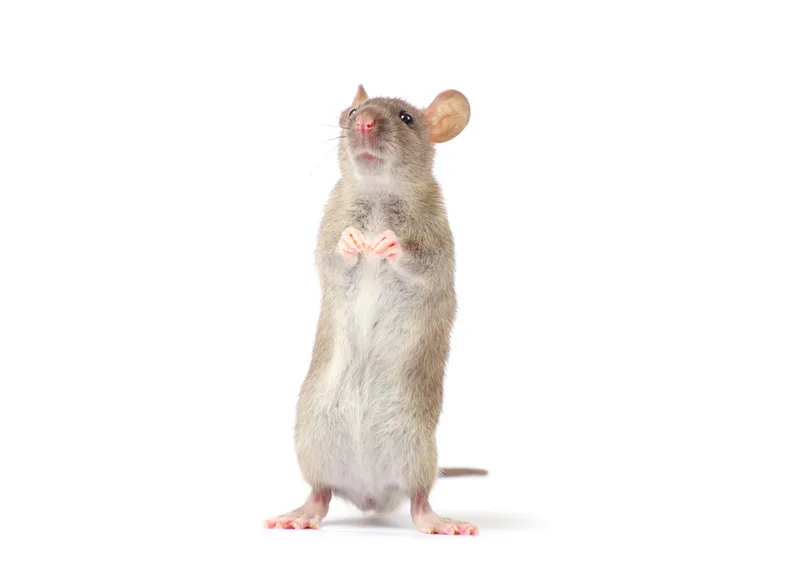
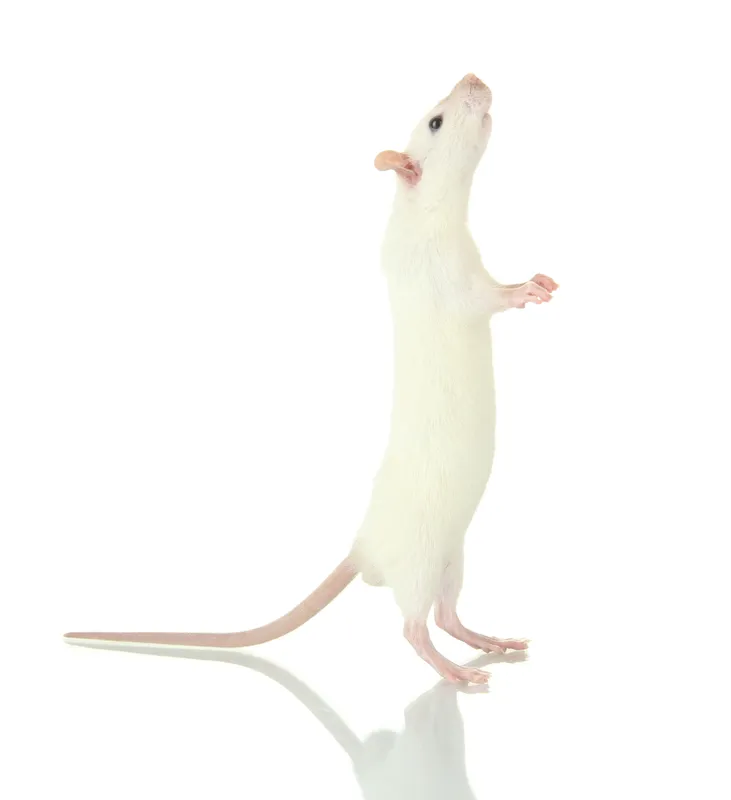
Brown rat
Rattus norvegicus
Very social, intelligent and hardy. Quickly bonds with its owner.
Overview & key figures
Regulations
Companion animal (not CITES-listed)
ℹ️Subject to Swiss Animal Welfare Ordinance (TSchV/OPAn): housing, care and enrichment required. Social housing: highly social species—keep in groups; OPAn requires appropriate social contact and enrichment (Art. 4 ff., Annex 2). Release into the wild is prohibited (potentially invasive). Not CITES; no federal mandatory marking.
Lifespan
from 2 to 3.5years
Adult weight
from 250 to 500g
ℹ️Male 300-500 g, female 250-350 g
Lifestyle
Nocturnal
Body temperature
from 35.9 to 37.5°C
Sexual maturity
from 42 to 56days
ℹ️6-8 weeks
Gestation
from 19 to 23days
Litter / clutch size
from 6 to 12
Habitat & environment
Type of housing
Multi-level cage, sheltered from drafts
Substrate & bedding
Towels, DryBed®/VetBed®, Toftbo® mats, yoga mat or blanket. Plant-based bedding: Nullodor® (fir wood), hemp, recycled paper. Avoid cedar and pine.
Lighting
Photoperiod : 12:12 h day/night cycle
Required equipment
- ✓ Hammocks
- ✓ PVC tubes
- ✓ Ropes
- ✓ Plastic nest box / flower pot
- ✓ Food bowl
- ✓ Heavy water bowl (refresh daily)
Technical parameters
| Ambient temperature | 20–24 °C Comfort range 20-24 °C; tolerance 18-26 °C; avoid >28 °C |
| Humidity | 40–70 % |
Nutrition
Daily base
Vegetarian with omnivorous tendencies. Fast transit: several meals per day. Pellets or extruded food (>20% protein, <5% fat).
🪵 Pellets
Supplements & pellets
Dietary staple
Treats
Animal protein (occasionally). Remove uneaten fruit after 12 hrs.
To avoid
- 🌻 Seed Mix — Predisposes to obesity
- 🍽️ Table Scraps
- 🍊 Citrus
- 🥬 Cabbage — Cabbages / Brassicas
- 🥔 Potato — Raw
- 🍐 Pear
- 🍈 Melon
- 🍫 Chocolate
Behaviour & socialisation
Social life
Must live in a group (social animal). Rarely bites.
Activity cycle: Very active, especially at night.
Enrichment
- Social interaction
- Puzzle toys
- Out-of-cage time
- Hammocks and ropes
- PVC tunnels
Health & prevention
Preventive medicine
Heatstroke risk above 28 °C. Provide a cool spot during hot weather. Deworming if necessary.
Vaccination
None
Surgery & sterilisation
Early spaying (female, at 4 months) recommended to prevent mammary tumours. Castration (male) for behavioural reasons. Hormonal implant possible.
Clinical warning signs
If any of these symptoms appear, prompt veterinary care is essential. Contact an exotic-pet vet as soon as possible — they can assess your animal's condition and make the appropriate diagnosis.
Common conditions
Chronic respiratory disease (CRD)
Cause: Infectious complex (Mycoplasma pulmonis, Streptococcus, Bordetella, Pasteurella) plus irritants (ammonia, dust)
Symptoms: Sneezing, nasal/ocular porphyrin, dyspnea, wheezing, exercise intolerance
Prevention: Bonne ventilation, litière peu poussiéreuse (p. ex. chanvre/papier), nettoyage régulier, quarantaine des nouveaux rats (min. 2–3 semaines), éviter la surpopulation
Mammary tumors
Cause: Mammary adenomas/adenocarcinomas; hormonal influence
Symptoms: Subcutaneous ventral/lumbar masses, sometimes rapid growth
Prevention: Contrôle de l’obésité, sélection responsable des reproducteurs; discussion sur stérilisation préventive selon lignée/risque
Cutaneous abscesses
Cause: Bite/trauma; opportunistic bacteria (Staphylococcus spp., Streptobacillus spp.)
Symptoms: Warm, painful swelling; may fistulate with thick pus
Prevention: Gestion des groupes, enrichissement, hygiène de la cage, taille des ongles
Ectoparasites (mites, lice)
Cause: Radfordia ensifera, Myocoptes musculinus, Polyplax serrata; spread via contact
Symptoms: Pruritus, scaling, crusts, alopecia; sometimes asymptomatic
Prevention: Quarantaine (2–3 semaines), traitement de groupe si infestation; en Suisse, produits spot-on à base de sélamectine/ivermectine disponibles via vétérinaire
Endoparasites (pinworms/protozoa)
Cause: Syphacia spp., Aspiculuris tetraptera; Giardia spp. possible
Symptoms: Intermittent diarrhea, anal pruritus, mild weight loss; often subclinical
Prevention: Hygiène stricte, changement de litière fréquent, quarantaine; vermifugation ciblée selon coproscopie
Malocclusion/overgrown incisors
Cause: Malalignment, trauma, inadequate wear
Symptoms: Hyporexia, weight loss, drooling, difficulty grasping food
Prevention: Sélection, enrichissement masticatoire approprié; contrôles dentaires réguliers
Pituitary tumors (lactotroph adenoma)
Cause: Prolactin-secreting pituitary adenoma
Symptoms: Ataxia, hindlimb weakness, lethargy, weight gain, mammary changes in older females
Prevention: Sélection génétique; contrôle de l’alimentation et du poids; dépistage précoce des signes neurologiques
Pododermatitis (bumblefoot)
Cause: Obesity, abrasive/wire flooring, moisture, Staphylococcus spp.
Symptoms: Plantar lesions, ulcers, pain, lameness
Prevention: Substrats souples, surfaces non grillagées, hygiène/séchage, contrôle du poids
Chronic kidney disease
Cause: Age-related degeneration, nephrosclerosis; genetic/dietary factors
Symptoms: PU/PD, weight loss, poor coat, reduced appetite
Prevention: Hydratation adéquate, alimentation équilibrée, contrôle du poids, dépistage sénior
Zymbal’s gland tumors
Cause: Aggressive, fast-growing sebaceous tumor
Symptoms: Mass near ear canal, chronic otitis, strong odor
Prevention: Détection précoce, hygiène auriculaire, prise en charge rapide
Corynebacterium kutscheri infection
Cause: Corynebacterium kutscheri; opportunistic disease with stress/overcrowding
Symptoms: Weight loss, internal abscesses, respiratory distress; sometimes sudden death
Prevention: Biosécurité, quarantaine, éviter la surpopulation; hygiène stricte