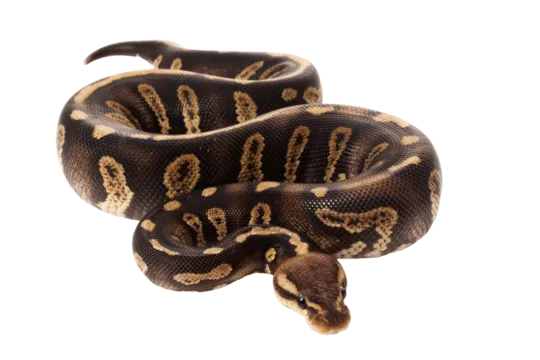
Ball python
Python regius
Discreet, stressed by exposure; tightly enclosed hides are essential
Overview & key figures
Regulations
CITES Appendix II
ℹ️Keep/trade with legal origin proof; CITES permits for import/export. OPAn: reptile minimum standards (enclosure size, hides, UV/heat). Some cantons/municipalities may require permits for large snakes.
Lifespan
from 20 to 30years
Adult weight
from 0.7 to 2kg
ℹ️males 0.7-1.2 kg; females 1.2-2.0+ kg
Adult size
from 90 to 150cm
Lifestyle
Crepuscular, nocturnal
Body temperature
Ectothermic
Sexual maturity
from 24 to 36months
ℹ️Often weight-correlated (♀ >1200 g, ♂ >600-800 g)
Incubation
from 55 to 60days
ℹ️Incubation at 31-32 °C
Litter / clutch size
from 4 to 11eggs
Habitat & environment
Type of housing
Secure, well-ventilated terrestrial terrarium with multiple hideouts
Substrate & bedding
Coco fibre, non-resinous bark, aspen/poplar chips; absorbent paper in quarantine
Lighting
Photoperiod : 10–12 h/day
UVB
- UVB need : Not essential but beneficial
- Lamp type : Low-intensity UVB fluorescent tube (UVI 0.5–1)
- Recommended brands : X-ReptileReptile ExpertSolar RaptorArcadia
- Replacement : Every 6 months (UVB depletes before visible light)
- UVB does not pass through glass or plexiglass. Place the lamp inside the terrarium, under a protective grille. Direct sun behind a window pane is ineffective and may cause dangerous overheating.
Exercise & outings
Nocturnal exploration; enrichment via varied hides and textures
Required equipment
- ✓ Two identical hides (warm/cool)
- ✓ Wide, stable water bowl
- ✓ Thermostat with probe on the heat source
- ✓ Multiple thermometers/probes + hygrometer
- ✓ Protected heat mat/cable/panel
- ✓ Low branches and artificial foliage for cover
- ✓ Adequate ventilation
Technical parameters
| Hot spot | 31–33 °C Ground temperature at the warm spot |
| Cool spot | 26–27 °C |
| Ambient temperature | 26–29 °C Stable thermal gradient; avoid >34 °C |
| Humidity | 55–70 % Raise to 65-75% before shedding |
Nutrition
Daily base
Strict carnivore; thawed rodents of appropriate size
🥩 Proteins
⏰ Feeding frequency
- • Juveniles: every 5-7 days
- • Subadults: every 7-10 days
- • Adults: every 10-14 days
- • Post-feeding: avoid handling for 48-72 hrs
Treats
Occasional, to stimulate appetite in functional anorexia
To avoid
- 🐁 Live prey — Live prey: bite and infection risk
- 🐾 Wild-caught prey — Parasites/pathogens
Behaviour & socialisation
Social life
Solitary species; cohabitation not advised outside of breeding
Activity cycle: Crepuscular to nocturnal
Enrichment
- Multiple, varied hideouts
- Different textures/substrates
- Low branches and foliage for cover
- Periodic, low-stress redecoration
Health & prevention
Preventive medicine
60-90-day quarantine for every new individual; ectoparasite checks; serial weigh-ins; T°/RH monitoring; strict hygiene (reptile-compatible disinfectants, rinse if necessary)
Vaccination
No standardised vaccinations
Surgery & sterilisation
Surgery mainly for skin lesions, masses, dystocia if needed
Clinical warning signs
If any of these symptoms appear, prompt veterinary care is essential. Contact an exotic-pet vet as soon as possible — they can assess your animal's condition and make the appropriate diagnosis.
Common conditions
Functional anorexia linked to stress/environment
Cause: Inadequate temperature/humidity, lack of hides, excessive handling, seasonality
Symptoms: Feeding refusal without other systemic signs; stable or slightly decreasing weight
Prevention: Correct thermal gradient, tight hides, reduced stress, night-time feeding
Dysecdysis
Cause: Low humidity, dehydration, ectoparasites
Symptoms: Incomplete shed, retained spectacles
Prevention: RH 55-70% (65-75% pre-shed), soaking/humid hide, parasite control
Infectious stomatitis
Cause: Trauma, poor hygiene, opportunistic bacteria
Symptoms: Gingivitis, caseous exudate, oral pain, anorexia
Prevention: Terrarium hygiene, avoid live prey, monitor husbandry parameters
Ophidian pneumonia
Cause: Opportunistic bacteria (Pseudomonas, Aeromonas, Proteus, Klebsiella), Mycoplasma; viral differentials (nidovirus, paramyxovirus)
Symptoms: Wheezing, slightly open mouth, head-up posture, nasal discharge
Prevention: Stable temperatures, proper ventilation, strict quarantine
Mites (Ophionyssus natricis)
Cause: Introduction of contaminated animals/items
Symptoms: Skin irritation, pruritus, mobile black/red specks, mild anaemia
Prevention: Quarantine, regular inspection, environmental disinfection
Thermal burns
Cause: Unthermostatted or unprotected heat source
Symptoms: Erythema, blisters, skin necrosis
Prevention: Reliable thermostat, physical guards on heating elements
Dystocia/follicular stasis (females)
Cause: Hypocalcaemia, dehydration, oversized eggs, lack of nesting site
Symptoms: Caudal thickening, anorexia, unproductive straining
Prevention: Adequate body condition, hydration, appropriate nesting box
Key indicator of a food's mineral balance, especially in reptiles (tortoises, lizards): a calcium-favoured ratio supports bone and shell strength and helps prevent metabolic bone disease. In herbivorous mammals, mineral balance is managed differently (hay, supplementation, UV light) — these targets don't translate directly.
For insects (crickets, roaches…), a calcium powder at feeding time can offset an unfavourable ratio.
- ≥ 2 — Adequate balance
- 1–2 — In moderation
- < 1 — Avoid / occasional only
This food is above the 50,000 IU/kg dry matter threshold, making it a good vitamin A source.
Content : — IU/kg DM
Essential for mucous membranes, skin, feathers and vision. Deficiency: respiratory infections, dysecdysis, eye problems, drop in laying.